
The Art of Drawing a World from Scratch (Literally)
From rough storyboards to fully inked pages, how The Mannamong comes to life, one panel at a time.
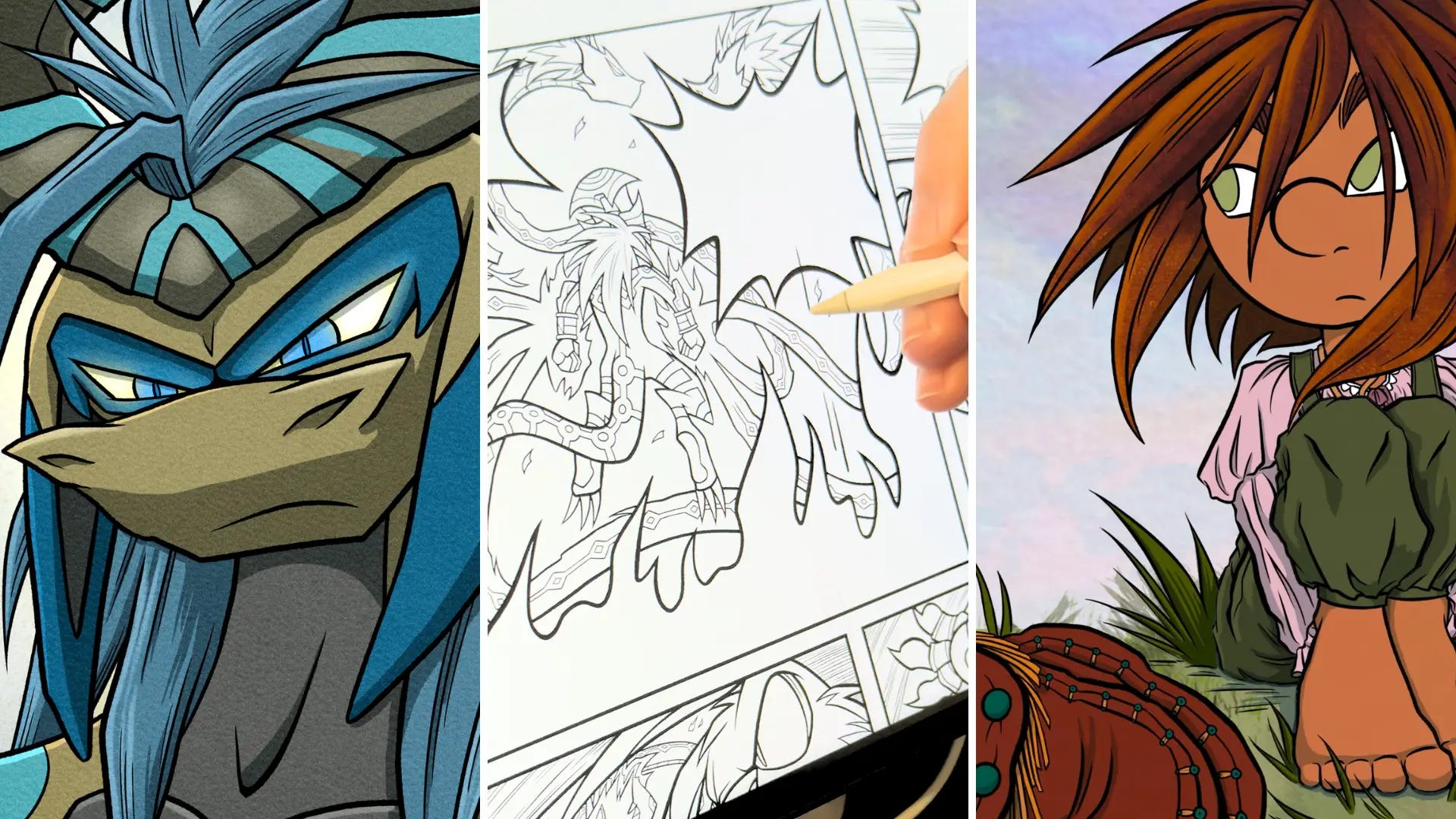
This is Michael, creator, writer, and artist of The Mannamong. A supernatural fantasy graphic novel series. In this post, I would like to share an overview of my comic-making process to illustrate how much I’ve learned about visual storytelling through this medium.
When deciding what to prioritize and which ideas to explore, I often alternate between writing and drawing scenes that unfold in my mind. During the creation of Volumes 1 and 2, I didn't have a structured outline and was largely improvising as I went. Today, I am more organized; I revisit the rough scenes I drew and connect them into a more cohesive narrative before planning out the story.
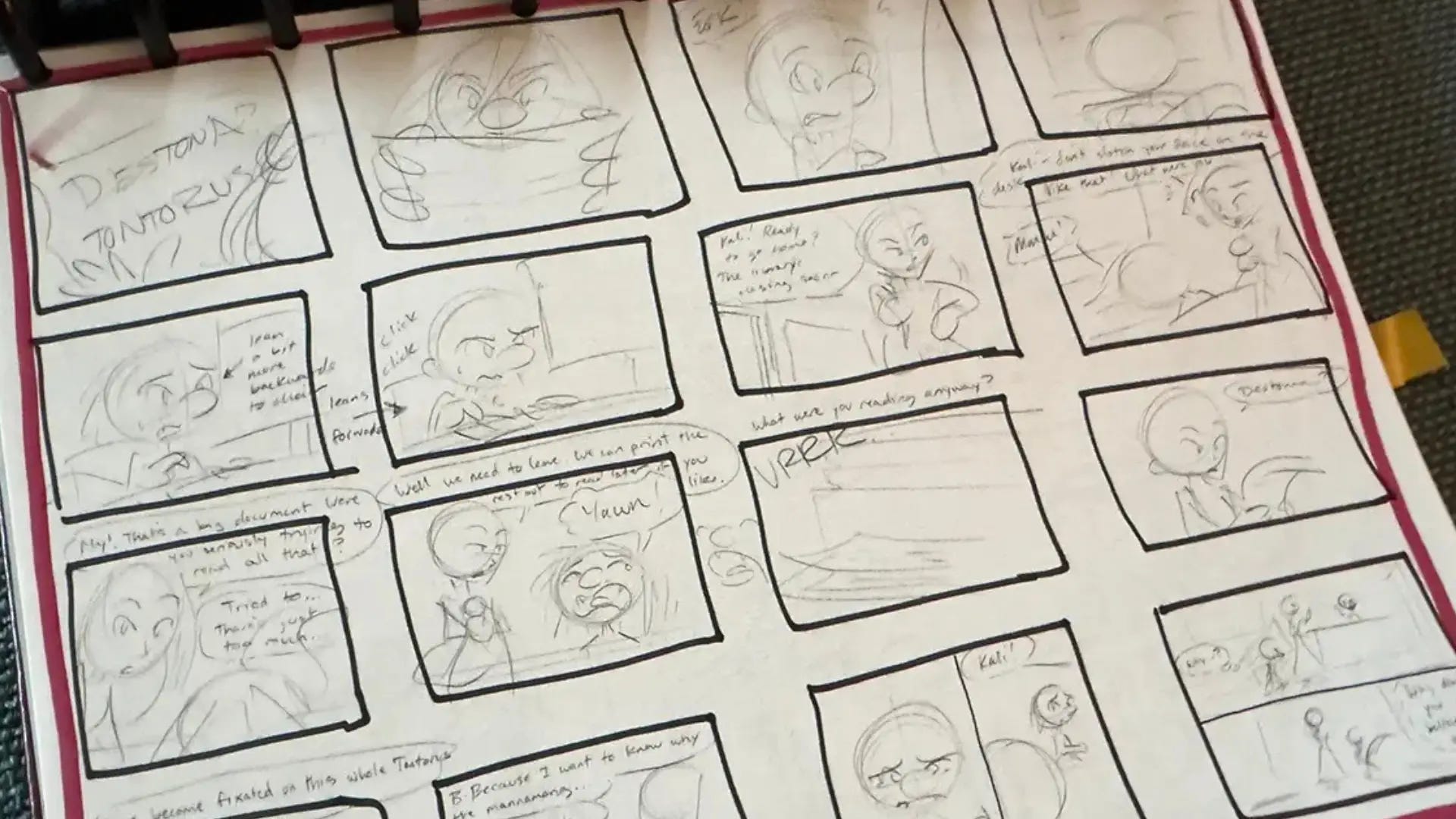
To get the visuals out of my head, I draw storyboards. I picture a scene that I need to sketch quickly before the idea is forgotten. The goal is to combine this with my script later on. The expressions, body language, and framing of the scene are the most important details I want to capture immediately. If dialogue comes to mind, I include it in the storyboard or add it to the script later.
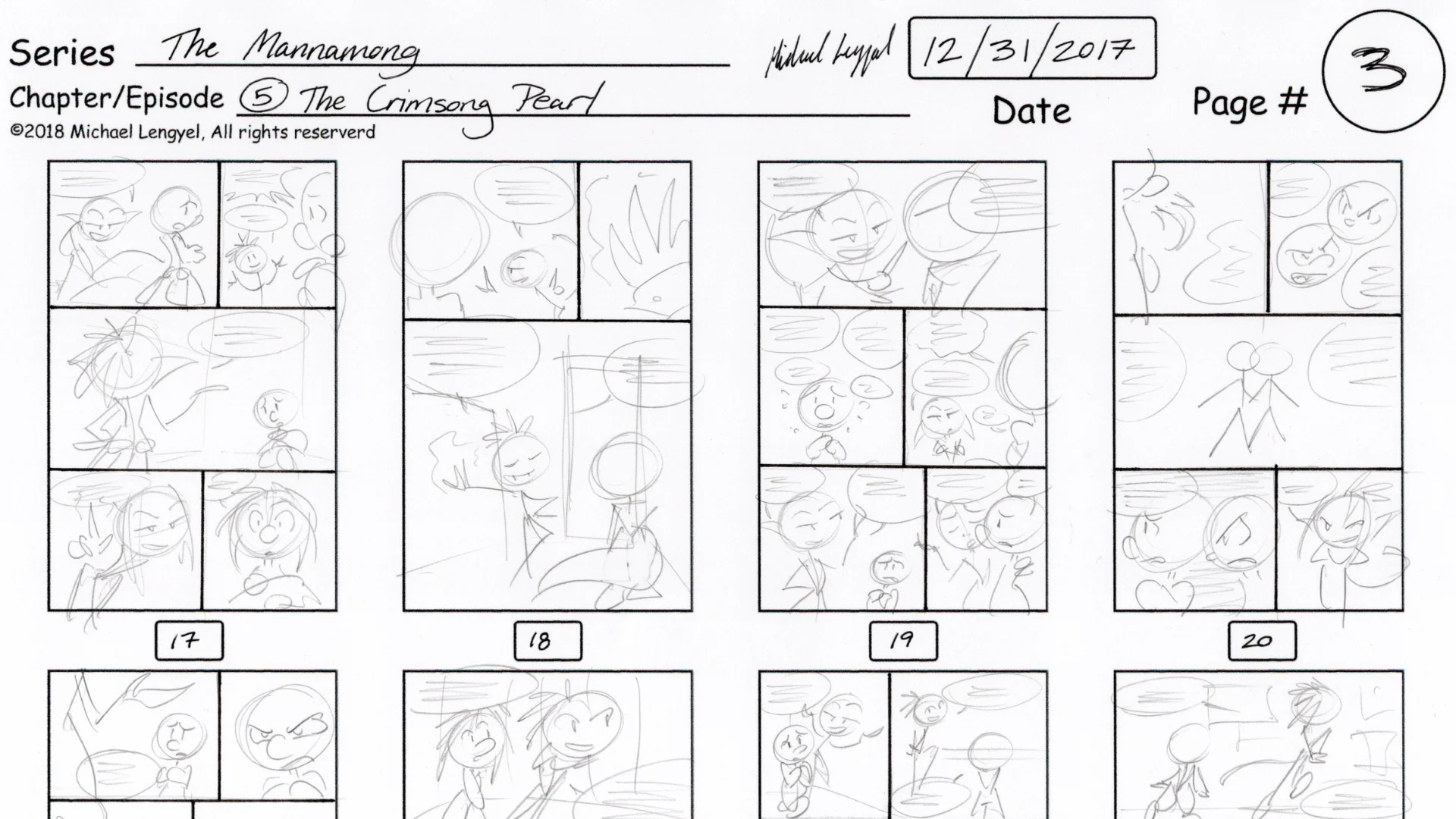
After that, I compile the scenes from my thumbnail storyboards and sketch out another rough draft in comic format. This allows me to see how the panels will be arranged and to estimate how many pages the chapter will require. I aim to divide the total page count by four, ensuring that certain scenes are placed correctly for an effective page-turn reveal when it goes to print. Because of this, I sometimes add new storyboard scenes or combine old scenes to achieve the right flow.
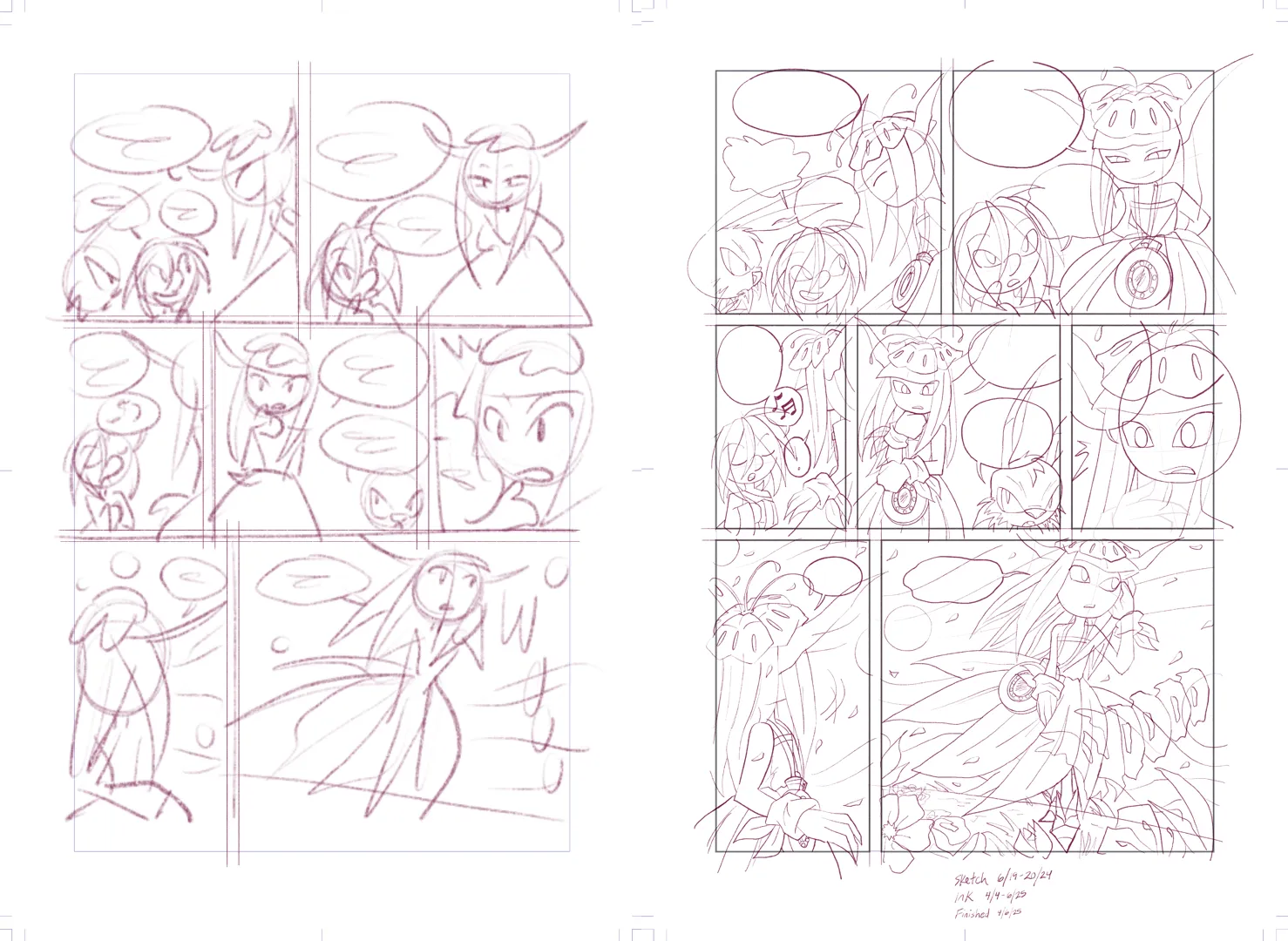
It’s finally time for me to start drawing the pages. I begin by sketching rough details to position the characters, and then I add speech bubbles in the available space. This helps me evaluate whether the dialogue flows well and fits properly within the panels. At this stage, I usually make final edits to my script. Once I’m satisfied with the overall layout, I refine the sketches with cleaner details and add the background scenes last. My primary focus is on the characters and their expressions, as well as their postures, to ensure they accurately convey the mood I originally envisioned during the storyboard stage.
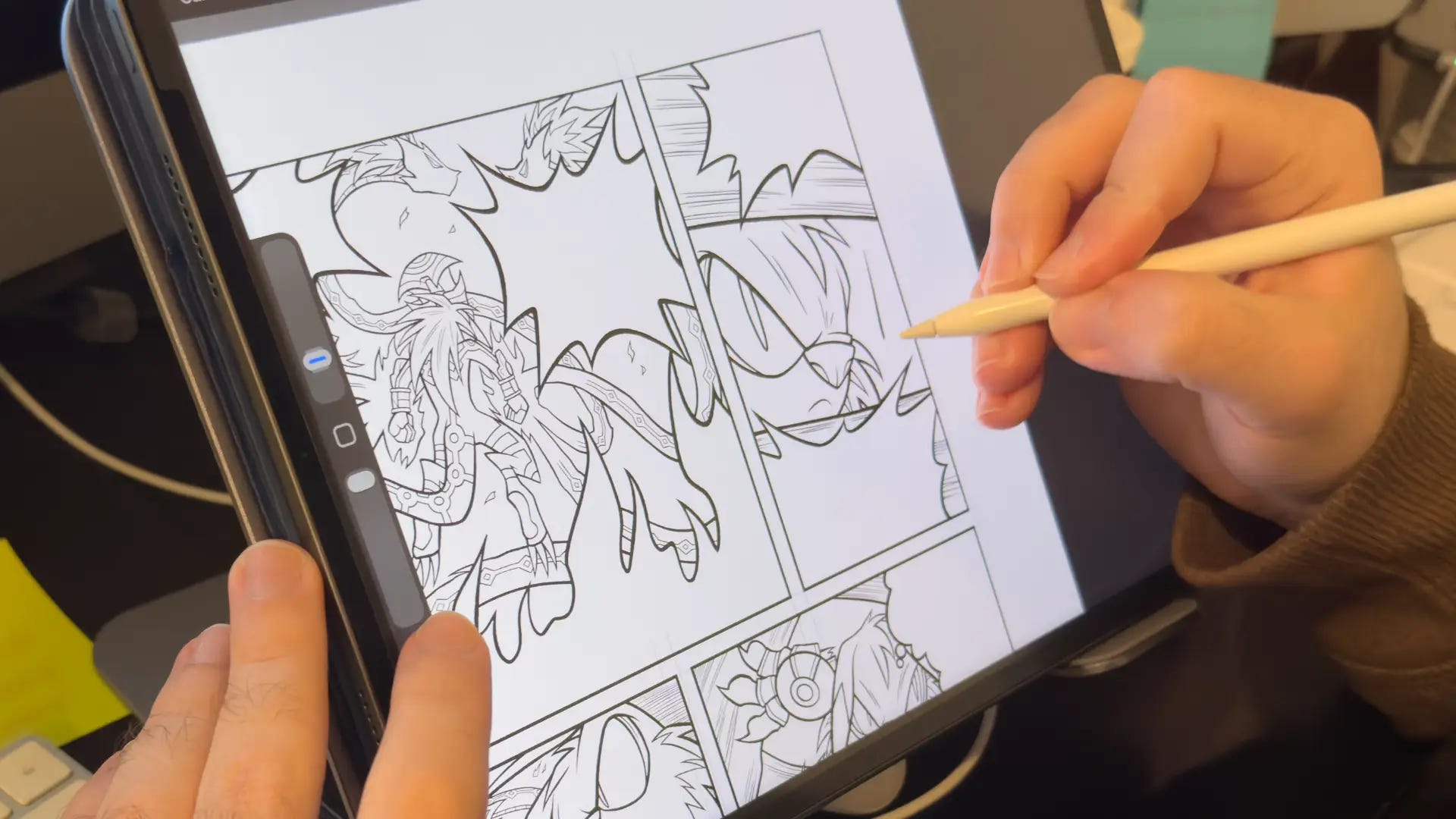
The inking stage takes the most time. I’ve spent years refining my style to find the right balance of thick and thin lines, and by Volume 3, I finally feel like I’ve mastered it.
This is also where I carefully check every character for consistency. I keep reference sheets nearby to make sure hairstyles, clothing, expressions, and accessories stay true from page to page.
Inking usually takes about twice as long as penciling. As I go over my rough sketches, I often notice anatomy, perspective, or design details that need to be corrected before the artwork is finalized. It’s the stage where everything comes together, and where many of the final improvements are made before the pages are complete.
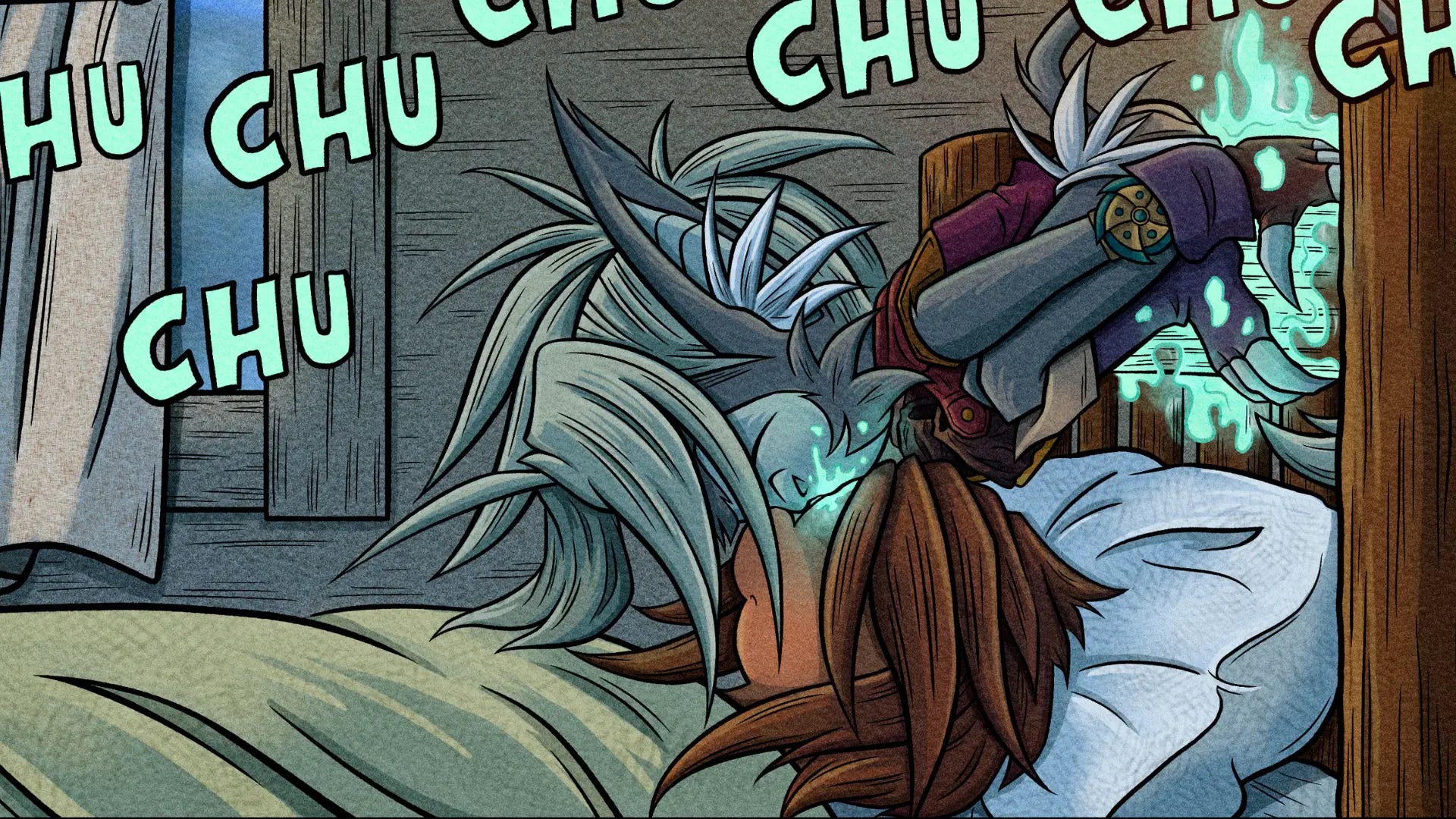
Finally, we reach the coloring stage of the story. Recently, I’ve been using solid colors during inking to spot potential errors and avoid getting confused by overlapping lines. Once I finish inking, I hand the pages over to my mother, Kathy, for coloring. Together, we’ve prepared palettes for the characters, making it easier for her to paint. I also provide her with specific directions on the colors and lighting of the scenery to match the mood I envision.
Overall, this has been the general process for creating The Mannamong in the past few years. I’m still learning a lot as I go, but I’ve developed a more consistent workflow for brainstorming and thoroughly illustrating my ideas. It has been a challenging yet rewarding journey to apply what I’ve learned so far to a project I’ve wanted to pursue since childhood, one that I can create with my own two hands.
A life story I’m trying to understand, with my protagonists, Kali and Tonto, as they seek hope for a brighter tomorrow.