
How to Create a Kids’ Graphic Novel from Start to Finish
Creating a kids’ graphic novel isn’t just about drawing well — it’s about building trust with young readers.
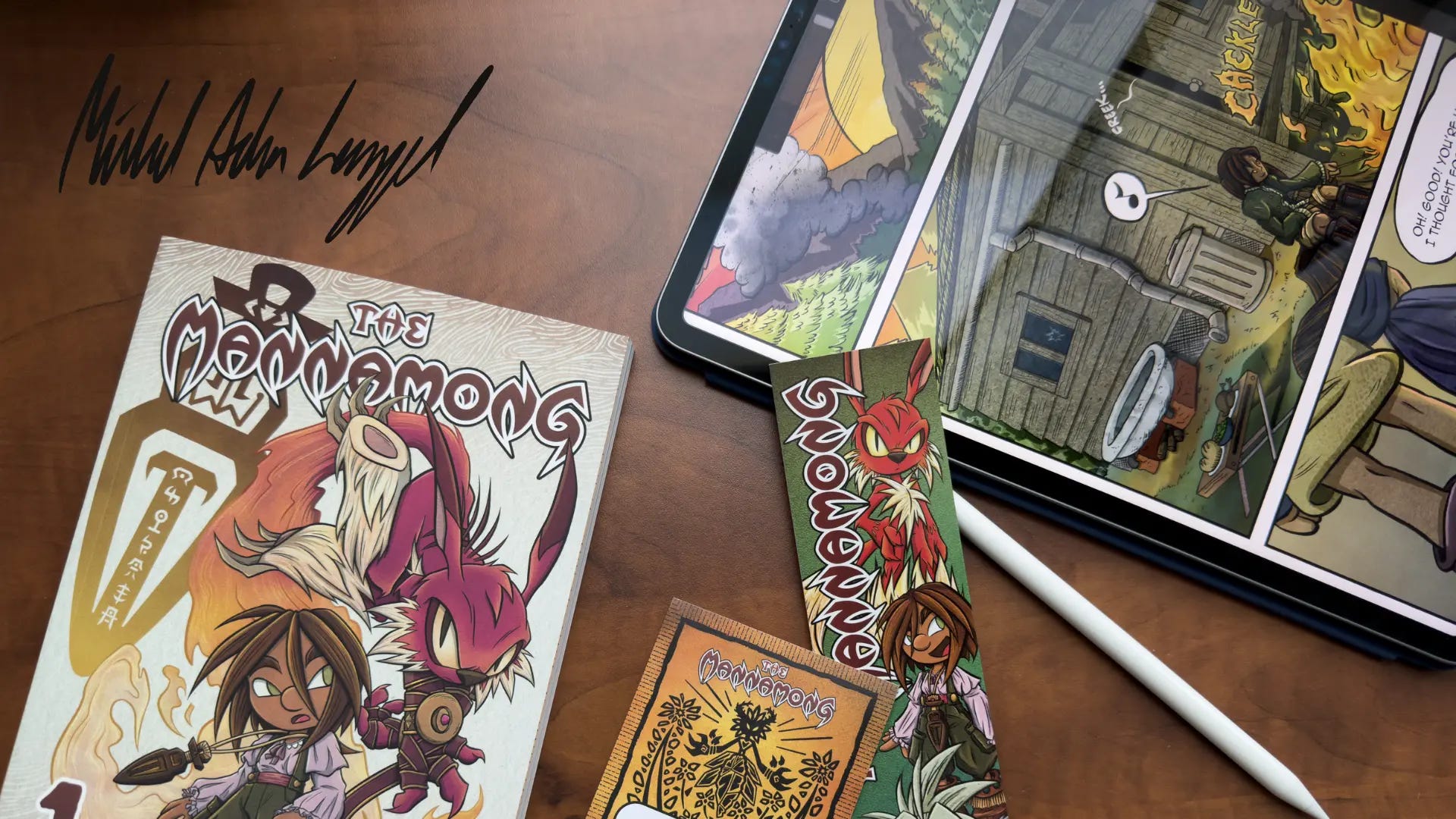
This post walks through the entire process, from the first story idea to holding the finished book, using The Mannamong as a real-world example of how one independent creator built a fantasy world step by step.
Creating a children’s graphic novel is one of the most rewarding creative paths an author-illustrator can take. It blends storytelling, visual design, and emotional truth into a form that invites young readers to step inside a world and stay awhile.
Whether you’re starting with a blank sketchbook or refining an idea that’s been with you for years, this guide walks through each major stage of the process—from the first spark of a story to sharing the finished book with readers—using The Mannamong as a case study in how an independent creator can bring a fantasy world to life.
1. Start With a Story Worth Telling
Every strong graphic novel begins with an idea that refuses to let go. For stories aimed at children, that idea should be rooted in emotion, curiosity, and growth.
When Michael began The Mannamong, his goal wasn’t to teach a lesson—it was to tell the kind of story he would have wanted to read as a child. Instead of speaking to kids, he wrote from the point of view of the protagonist and asked a simple question: How would she feel in this moment?
As you shape your own concept, consider:
What themes will resonate with readers ages 8–12?
Who is your main character, and what makes them relatable?
What emotions drive the story—hope, fear, wonder, forgiveness?
The Mannamong grew from a single idea: What if invisible spirits were still among us, quietly guiding the world even after we stopped believing in them? From that spark came a layered mythology centered on courage, balance, and empathy.
Start simple. Identify a core emotional truth your readers can connect to, then let the plot and characters grow naturally around it.
2. Develop Memorable Characters
In children’s graphic novels, characters are everything. Young readers connect first through visuals—faces, expressions, posture—long before they process dialogue.
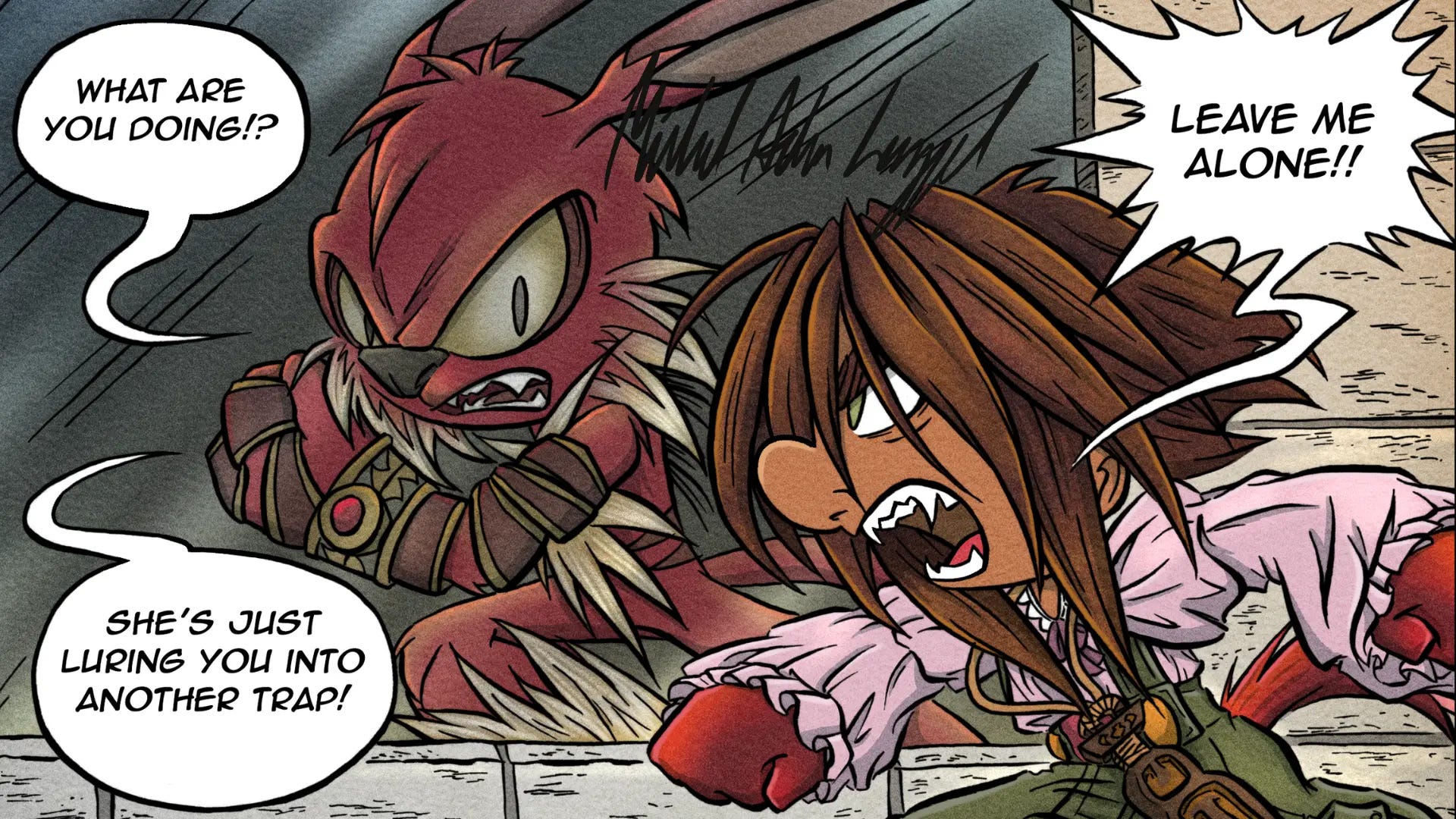
In The Mannamong, Kali Teal is an ordinary girl thrust into an extraordinary situation after meeting Tontorus, a rogue mannamong. Their uneasy relationship—marked by fear, humor, and gradual trust—drives the story forward.
When designing your cast:
Give each character a clear role tied to the theme.
Create distinct silhouettes that are recognizable at a glance.
Let personality influence appearance.
Tontorus’s fiery red tones and imposing presence immediately signal danger, shaping Kali’s fear and misunderstanding. Kali’s expressive reactions reflect her emotional exhaustion and determination to uncover the truth when no one else believes her.
Sketch freely at this stage. Focus on emotion and clarity, not polish.
3. Build a World Readers Want to Explore
Kids love worlds that feel magical yet grounded—places that seem bigger than the page but still follow understandable rules.
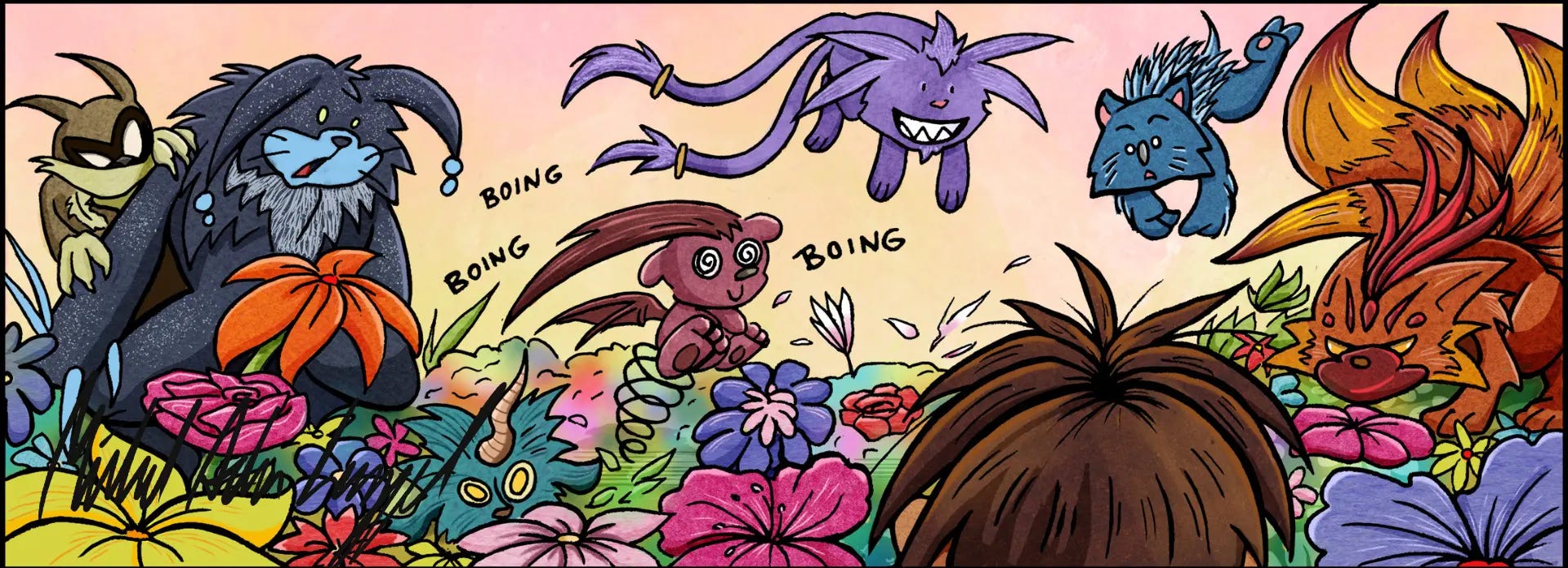
The Mannamong blends everyday life with a hidden spiritual realm, much like Dorothy stepping into Oz. Kali’s ordinary town masks a deeper reality revealed through dreams, storms, and subtle shifts in nature. Readers uncover these secrets alongside her.
When building your world:
Start small and familiar, then expand as the story requires.
Define clear rules—what’s possible, what’s not, and why.
Maintain visual consistency through color, symbols, and motifs.
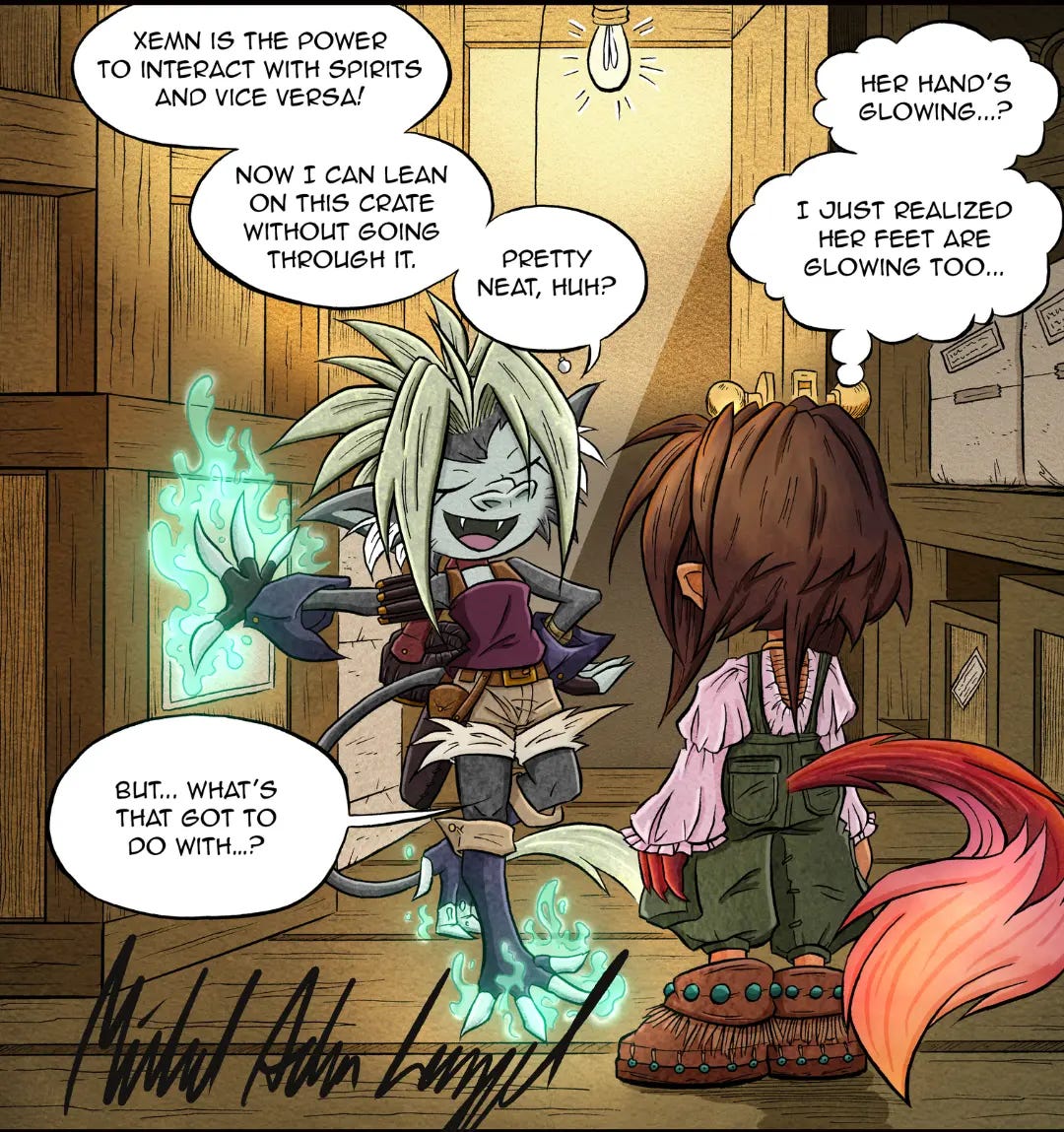
In The Mannamong, Kali learns about Xemn—a spiritual energy tied to nature that allows mannamong to interact with the human world. The system has limits, which helps keep the magic believable.
Worldbuilding doesn’t need to be exhaustive. It just needs to feel intentional and alive.
4. Write the Script
A graphic novel script sits somewhere between a screenplay and a storyboard. You’ll break scenes into pages and panels, describing both dialogue and visual action.
For example:
Page 88, Panel 6:
Kali slumps over her desk, exhausted. Her mother, Vianne, stands beside her, glancing between Kali and the computer screen.
Vianne:
“Kali, don’t lean your face on the desk like that.”
“…What are you…?”
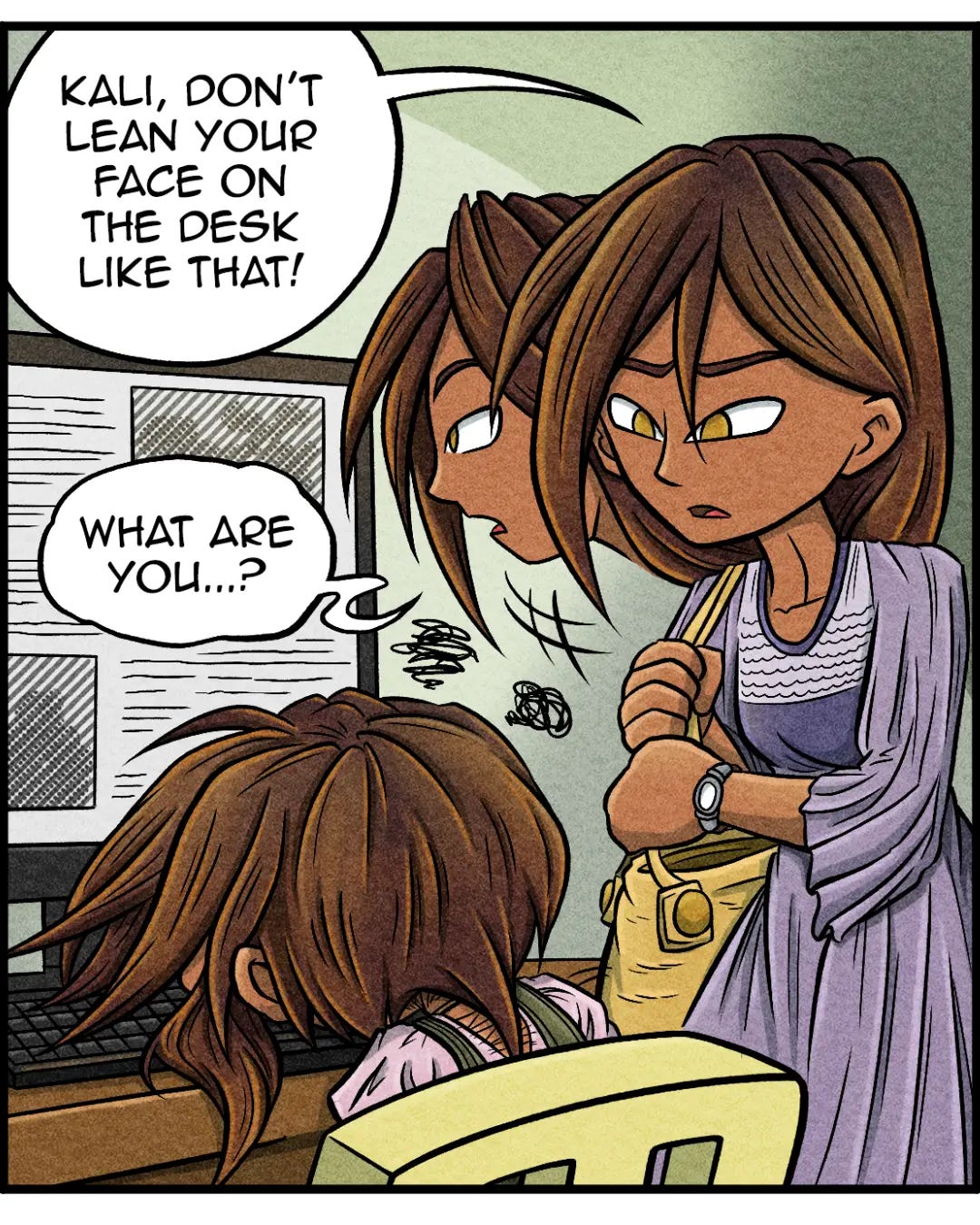
Each panel should communicate emotion, pacing, and movement. Keep dialogue concise—young readers respond best to rhythm and visual flow.
Simple tools like Google Docs, Scrivener, or Notion are more than enough for scripting. Clarity matters more than software.
5. Storyboard and Thumbnail
Before committing to finished art, create thumbnails—small, rough sketches of each page. This is where you solve pacing, composition, and visual storytelling.
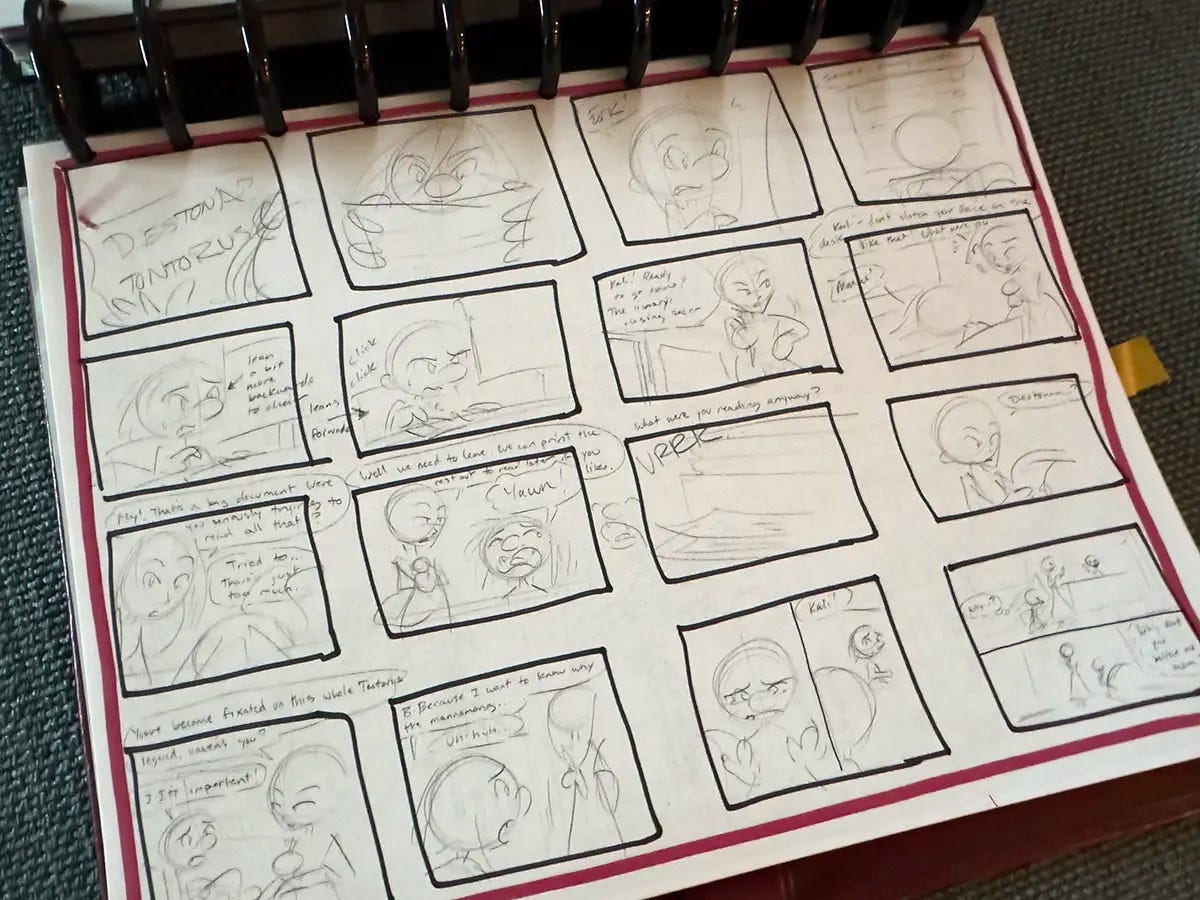
Early thumbnails for The Mannamong helped refine how Kali’s dreams echoed real-world events. Many panels began as rough figures before evolving into detailed illustrations filled with light and motion.
At this stage:
Prioritize clarity over detail.
Experiment with angles and framing.
Guide the reader’s eye naturally across the page.
Strong thumbnails can save countless hours later.
6. Illustrate and Ink
Once layouts are set, begin final illustration. Whether you work digitally or traditionally, choose tools that support consistency and comfort.
For The Mannamong, pages begin with digital pencils followed by clean black-and-white inks in Procreate. This approach keeps attention on expression and movement while echoing classic fantasy storytelling.
Helpful tips:
Maintain clean, readable linework.
Use contrast to guide emotion and focus.
Work in batches to keep style consistent.
7. Add Color and Lettering
Color brings emotion to life. It establishes mood, tension, and warmth in ways linework alone can’t.
In The Mannamong, pages are colored in Procreate, then refined in Photoshop with subtle glow effects to enhance the magical atmosphere.
When coloring:
Limit your palette to reinforce mood.
Use warm tones for safety, cool tones for mystery.
Keep lettering clean and readable—classic white balloons endure for a reason.
Choose fonts that match your tone: softer for warmth, more structured for fantasy or drama.
8. Edit, Proof, and Polish
Before publishing, review your work in print or digital proofs. Share it with beta readers—especially parents, teachers, and children in your target age range.
This stage helped refine pacing and simplify dialogue in The Mannamong. The goal isn’t perfection—it’s emotional clarity.
Ask yourself:
Can the story be understood visually?
Does each page encourage the next?
Does the dialogue sound natural for a child?
Revision is where good stories become great.
9. Publish and Share
Once finished, you have several options:
Self-publish through platforms like Shopify, Substack, Amazon KDP, IngramSpark or Kickstarter with small offset print runs.
Pitch to publishers specializing in children’s graphic novels
Share chapters online to build an audience first
The Mannamong began as a webcomic before becoming a self-published full-color print series available through the author’s website and Amazon.
If this is your first project, start small. A 32–40 page story is enough to demonstrate your voice and vision.
10. Keep the Wonder Alive
Completing a graphic novel is an accomplishment—but what sustains it is love for the story itself. Kids can feel sincerity on the page.
Every chapter of The Mannamong carries a quiet message of hope: that light exists even when it’s unseen, and courage often begins with compassion. That emotional truth—not technical perfection—is what turns a book into something lasting.
So begin. Sketch the first panel. Write the first line. Every great world starts with belief.
I’ll be reading this later (getting ready for work, came across your blog on instagram)! Your article looks very interesting. :)